High Bar Back Squat Cues

Cues are signals, words, or actions that trigger a sequence. Developing a proper sequence for a lift improves form and performance, and prevents injuries.

But here’s reality: THERE ARE NO PERFECT CUES. What works for one lifter may not work for others. And sometimes, if the coach is open-minded and encourages two-way communications with the athletes, the best cue can sometimes come from the lifters themselves.

Here is another reality: Some cues are overused and abused because some ‘expert’ did an excellent job marketing it.

Cues are NOT written in stone. They serve merely as guidelines. If cues are taken as gospel, the coach and lifter will eventually fall into the proverbial trap of ‘tying their hands behind their back,’ resulting in frustration and lack of progress. Worse, they can result in injury. But if cues are treated as guidelines, both coach and lifter will enjoy the process, resulting in growth and new discoveries. 

One last thing to consider: Keep cues SIMPLE. There is such thing as overcoaching.

Back Squats are the lifeblood of the Weightlifter.

Here are some cues I use, and some cues that have been overused or even misunderstood:

A.     Do I break at the knee or hips? I don’t worry about this. I simply tell the lifter to “drop straight down and sit in between heels.’ 

B.     Knees Out versus Knees In. Knees OUT cue is overused and abused. On the way down, if the intent is to sit between heels (see bullet point A), the lifter will automatically bring knees out. On the way up, simply stand up. Standing up is a natural movement. When the lifter stands up, sometimes the knees will PUNCH IN. This is perfectly acceptable as long as the knees don’t buckle in (aka valgus collapse). 

C.    Unfold asap by shooting hips forward. Back squats are meant to be explosive. Posterior chain is the primary mover. However, on the way up, the goal is to unfold asap. This can be done by shooting the hips forward. Shooting the hips forward (or getting hips under the bar) as soon as lifter goes above parallel will also recruit the quads. This is critical as above parallel, the stretch shortening cycle (SSC) of the posterior chain is almost non-existent. 

Here is Brittany putting all the cues together.
“Begin With the End in Mind”

The entry’s title deserves to be in quotes to respectfully give credit to the man who initially coined the phrase – Stephen Covey.

“Begin With the End in Mind” means to begin each day, task, or project with a clear vision of your desired direction and destination, and then continue by flexing your proactive muscles to make things happen.

“Begin With the End in Mind” is the second habit of Stephen Covey’s legendary book The 7 Habits of Highly Effective People.

Covey writes that “Habit 2 is based on imagination–the ability to envision in your mind what you cannot at present see with your eyes.” The idea behind beginning with the end in mind is “based on the principle that all things are created twice,” Covey says. “There is a mental (first) creation, and a physical (second) creation.”

Buddy’s weightlifting journey – from beginning to end – is a manifestation of Covey’s words of wisdom.   

Short clip of Buddy’s journey in the beginning.

And short clip of what Buddy had in mind in the end.

·      

Olympic Lifts for Sports Performance – Vertical Jump

Even if one is not a basketball player, volleyball player or high-jumper, the vertical jump should not be ignored in the world of sports.

Coaches look at vertical jump as an immediate indicator as to how explosive their athletes are. Jumping ability is to athletic development what the ability to accelerate from 0-60 is to street-car racing. You can put a bigger engine in a car, but what it can do with the horsepower it has is evaluated in the race. Unless it can “get it up and go” quickly, that extra horsepower is of no use. In much the same way the vertical jump assesses your “get up and go” and how well you can use the horsepower in your own body. Put in different perspective, would athletes prefer to be a Formula 1 car or a dump truck that picks up garbage once a week?

To give you an idea how effective a tool the simple vertical jump test is for assessing whole body explosiveness, the NFL routinely uses a whole host of tests when evaluating athletes at their NFL combines. They use a bench press test, a 40-yard dash test, various tests of agility, and a vertical jump test. At first glance it might appear that the ability to jump would be the LEAST specific of those tests to a football player. However, the vertical leap is in fact the most effective of those tests in predicting the success of a football player – even better than the 40-yard dash!

So where do the Olympic lifts come into play?

Olympic lifts make athletes stronger and more explosive. Weightlifters generally have above average vertical jumps.

Here is Brittany. I recently tested her vertical jump for the first time. The average vertical jump for females is 13 to 14-inches. Brittany jumped at 19-inches first time around.

Olympic Lifts for Sports Performance – Power vs Squat

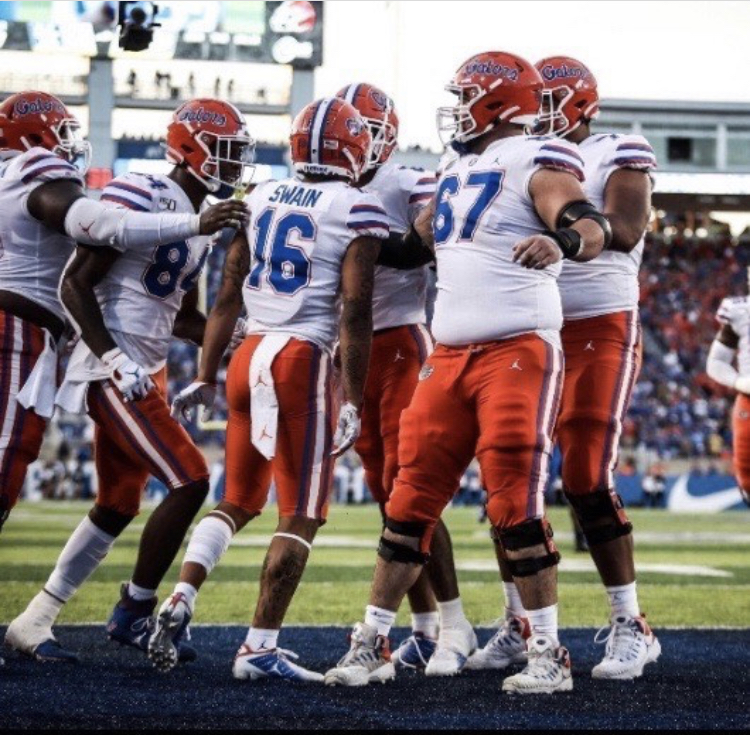
I don’t watch football. But the other day my father-in-law happened to be watching college football on ESPN and the Gators were playing. I used to coach a Gators player.

Chris, #67, currently plays as Offensive Guard. While he was still a junior in high school he had already received at least ten Division 1 football scholarship offers. He chose to attend the University of Florida. At the age of 17, he could have easily qualified for the Youth Nationals had he entered a weightlifting meet.

At any rate, I was inspired to write this entry when I saw him on TV.

If you ask 10 different coaches, you will get 10 different answers. That’s just how it is.

I keep things simple:

a)      If an athlete has the flexibility, I teach the ‘squat snatch’ and ‘squat clean’ versions (CrossFit terms), or simply snatch and clean (Weightlifting terms).

b)     If an athlete lacks flexibility, no problem. Power cleans and power snatches to the rescue, where the lifter receives the bar with legs above parallel. However, I would also work with the athlete to improve his or her mobility.

It’s common for many strength and conditioning (S&C) coaches to focus only on the power versions. Common misconceptions include:

a)      The power versions will teach the explosive ‘triple extension’ better.

b)     The squat versions are only for competitive weightlifters.

c)      His frame is too large to get into the bottom position, so we will stick with power.

These ^^ are NONSENSE.

Both power and squat versions teach the athlete how to generate explosive power.But the squat version will allow the athlete to lift heavier weights as the bar does not need to accelerate as high as the power version. The squat versions will also readily expose lack of flexibility.

The most overlooked aspect of general athleticism is flexibility, or lack thereof. If the athlete can only perform the power version due to lack of flexibility and mobility, the coach must treat as a weakness. If an athlete cannot get into the ATG position, this should be viewed as an opportunity for improvement. 

Flexibility is an important component of fitness for both the general public and athletes. It improves blood flow and circulation. More importantly, flexibility can prevent injuries because it will allow the athlete better range of motion. Think about it. Most sports involve movements that are UNPREDICTABLE. If an athlete moves in a way that exceeds his or her limited range of motion, injury will occur.

Olympic weightlifters are some of the most flexible athletes in the world, only next to gymnasts. The classic lifts will help athletes become stronger and more explosive, but they will also expose positional weaknesses resulting from lack of flexibility that sports performance coaches must seriously take into consideration.

Establishing Priorities – NO Excuse


Weightlifing is a microcosm of life. I have learned so much about myself from this sport as an athlete. But most importantly, I have learned so much from my lifters as coach. All valuable lessons I’ve learned are applicable and useful; they are reflections of real life. The list of lessons is too long for a single blog entry. So I will only focus on one.

Here is the bottom line: Yes, you have time to do <INSERT WHATEVER ACTIVITY HERE>.

This is a weightlifting blog created with the mission of spreading the sport. But this particular entry isn’t just about weightlifting. There is an important lesson to be learned.

This is Nikki. She is a wife, a mother of three young children, has a full time career, and coaches soccer. Oh, she is also a weightlifter. 

She’s an extremely busy woman. So how does she find the time to lift?

AHA!

Perhaps there is a lot of truth to the old saying “If you want something done, ask a busy person to do it.” But perhaps the answer is right before us.

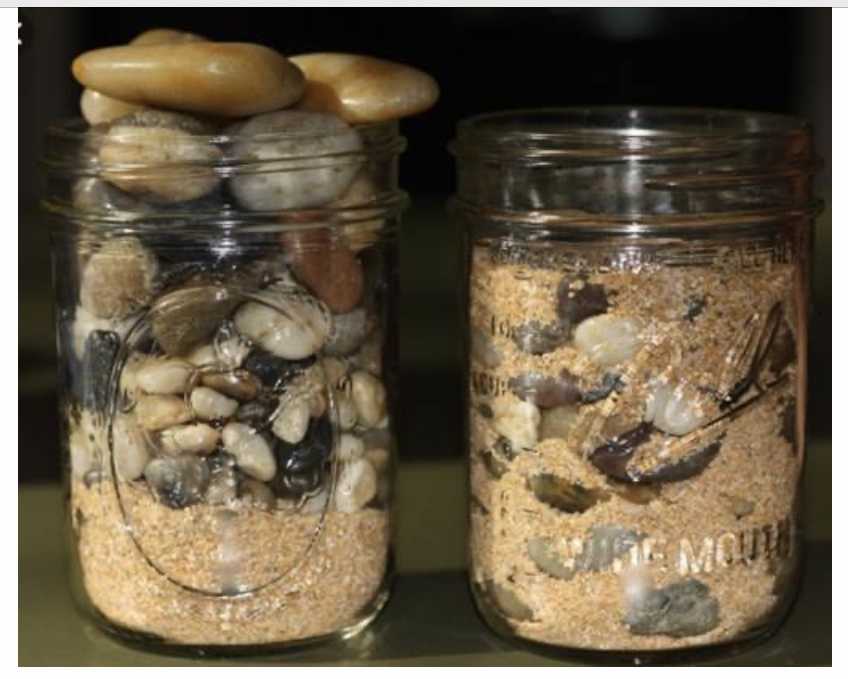
Imagine you were given a task. You’re handed a pile of rocks, pebbles, sand, maybe some seashells, and anything in between. YOUR TASK IS TO MAKE ALL ITEMS FIT INTO ONE JAR.

How would you do it? Would simply try to fit everything into the jar without regard to proper planning and no logical sequence? If so, your jar would end up looking like the one on the left.

Or would you PRIORITIZE and first focus on the largest item (symbolizing your biggest priority in life) and treat the rest accordingly? If you know how to prioritize, your jar would look like the one on the right. 

Here is something to consider: We all have 24 hours in a day. We all have 168 hours in a week. Nikki weightlifts 3 times a week, no more than an hour each session (remember she’s very busy). 3 hours out of 168 hours a week is a mere 1.8%. Less than 2% of her time dedicated to something she loves.  

Is there something you’ve always wanted to pursue? Can you set aside 2% a week to follow through with your interest? Of course you can. You just gotta arrange your big rocks, little rocks, pebbles, and sand in order.

Competing in Both Powerlifting And Weightlifting

Can a lifter compete in both Powerlifting and Weightlifting?

There are some truths to the old saying “one cannot serve two masters.” However, if an athlete is interested in several disciplines, the coach should encourage the athlete to try them out. You never know until you try. Moreover, there are some benefits to combining disciplines in the iron community.

So the short answer is it DEPENDS. 

YES if the athlete is recreational and is in the sub-elite level.

NO if the athlete wants to be an Olympian or World Champion someday.

And since most lifters are recreational and belong in the sub-elite category, there is absolutely nothing wrong with competing in both.

Just some things to consider based on my experience.

a)     Powerlifting to weightlifting transitions are generally more difficult after the lifter has been training a number of years. Powerlifting is a sport of absolute strength; therefore, powerlifters are used to ‘muscling’ and ‘grinding’ the bar without regard to technique particularly at the 1 Rep Max level. Though powerlifters are strong, flexibility is also sometimes a big hurdle. Of course, there are always exceptions.

One of my athletes, Emily, a medical student at the time, started out as a powerlifter. She decided to start weightlifting on the side for fun while maintaining her powerlifting program. She eventually entered her first weightlifting meet. Soon after, she entered a powerlifting meet where she set a record on the deadlift in her class.

b)      Weightlifting to powerlifting transitions are generally easier. At the non-elite level, masters age lifters often make this switch when their ligaments can no longer take the shock of the Olympic movements, or the required flexibility or speed. One downside from my experience, weightlifters rely on precision and perfection of movements. So when they max out the powerlifts, if they are not used to ‘grinding’ the moves at 1RM they prematurely quit the attempt. 

One of my athletes, Buddy, a high school student at the time, was a competitive weightlifter who came close to qualifying for the Junior Nationals. After his third meet, he decided to try powerlifting for fun. He beat the state record of 528-lbs when he deadlifted 535-lbs.

In summing up, it is possible to combine the two weight disciplines at the sub-elite level if one does not have lofty ambitions. Do not attempt if you want to someday lift in the Olympic Trials.

When Dominoes Meet The Pearl & The Dragon

Imagine four (4) dominoes lined up with the intent of toppling them in such a way that they fall perfectly in alignment and sequential order. Each domino represents a phase in Weightlifting.

Domino # 1 – Set up

Domino # 2 – First Pull

Domino #3 – Second Pull

Domino #4 – Third Pull

Now visualize the following sequence of events: A perfect setup allows for a perfect first pull; a perfect first pull allows for a perfect second pull; and, a perfect second pull allows for a perfect third pull.

If one domino is out of sequence, the whole performance suffers. Makes sense? Good. But it doesn’t end here. The lifter must also have the proper mindset. 

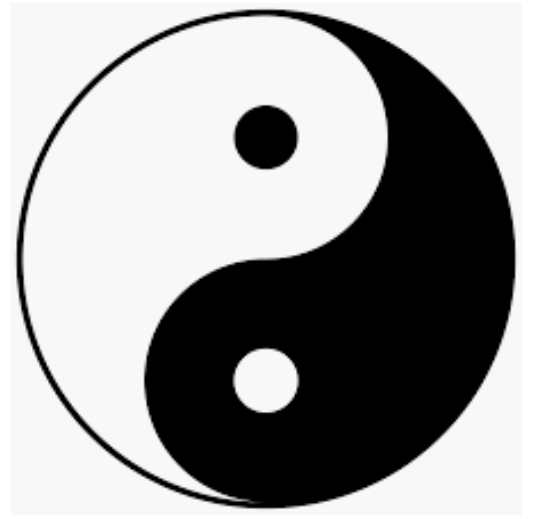
Enter ‘The Pearl and the Dragon’ coexisting within the Yin-Yang philosophy.

Yin-Yang simply is balance.

“Without balance, there is only imbalance.” – Confuzed Shoez

The balance between the pearl and the dragon must be in perfect harmony. In Asian culture:

a)      The Pearl – Represents calmness, peace, and serenity.

b)     The Dragon – Represents aggression, bravery, courage.

Got it? Good.

The lifter must understand the significance of the falling dominoes analogy as well as the importance of having the correct mindset as dictated by a well-balanced pearl / dragon Yin-Yang. Then and only then the two concepts can be integrated.   

Set-up and First Pull – The lifter must be a Pearl. 

Second and Third Pulls – The lifter must quickly become a Dragon in a split-second.

If the lifter is too much of a dragon (too aggressive) during set-up and first pull, when the lifter should be a pearl, it’s guaranteed the lifter will be all over the place during the execution of the second pull. Imbalance occurs. The most common error is when the lifter prematurely initiates the explosive phase. This typically results in the bar moving away from the lifter and the lifter jumps forward.

If the lifter is too much of a pearl (not enough aggression) during the execution of the second and third pulls, when the lifter should be a dragon, it’s guaranteed the lifter will rob himself or herself of kilos. Imbalance occurs.  The most common error is when the lifter lacks the necessary explosiveness. This typically results in the bar not achieving ideal height, and it could also result slow third pull (think Newton’s Law of Motion –   For every action there is an equal and opposite reaction).

Pho-losopher Confuzed believes in you. Now go find and achieve your balance.

It’s You Versus You


A wise coach once told me, “Comparison is the thief of joy.”

Whenever I encourage new lifters to consider competing, the most common response is, “I’m not ready. How would I compare to other lifters?”

To which I always respond, “Don’t worry about other lifters. IT’S YOU VERSUS YOU.”

Somewhere in China, there is a female teenager who is warming up with my maxes. But this doesn’t bother me. Because if I worry about competing against other lifters I don’t even know, if I worry about other lifters I may never see on the platform again, the energy I could otherwise use to compete against myself and improve myself will go to waste.

If you are better today than you were yesterday, you are winning against yourself. Come to think of it, this applies in all aspects of our lives.

Why Females Should Lift Weights 🏋️


It’s almost the end of the year. Come January 1st 2020, gyms across America will be flooded with “new year resolutioners” – both male and female new members alike.

One thing I’ve always noticed in the beginning of each year: Newbie male members curling in the squat rack (not that there’s anything wrong with that, we all gotta start somewhere) and newbie female members doing cardio on the treadmill or elliptical (again, nothing wrong with that). 

Here’s the point I’m trying to make: Many females are afraid to lift weights. That’s not an opinion. I’ve heard countless times from many females throughout my coaching career say “I don’t want to lift weights cuz I don’t wanna look like Hulk Hogan.”

Ladies, listen. You don’t have enough testosterone in your body to get jacked up. But I will say that lifting weights offer many benefits.

Here are some benefits:

a)      Lifting will strengthen your bones. Did you know that women are more likely to get osteoporosis than men?

b)     Lifting will increase muscle mass without the big trapz and bigly yuuge jaws. Muscle is essential to human movement, so maintaining muscle mass as you age can help prevent injury, improve range of motion and aid in daily functions.

c)      Lifting helps with weight loss. Like cardio, strength training burns calories. But it also increases excess post-oxygen consumption (EPOC), which occurs when the body continues to burn excess calories for hours after exercise.

d)     Lifting improves functional strength. Women need strength to get through the day. Whether it’s a long day at the office, carrying toddlers around, cutting the grass, or all of the above, you need functional strength to accomplish everything that needs to get done in a day. Resistance training improves strength in key areas like the core, legs, lower back and upper body.

e)     Lifting improves heart health. According to the Mayo Clinic, heart disease is the leading cause of death for women. Exercising regularly can reduce the risk of heart disease in women.

You can be strong and maintain your femininity and gain all the benefits associated with lifting. So don’t be afraid to hang out with the meathead broz and slam some weights.

KISS 💋 Weightlifting

No. Not that kind of kiss.

Keep It Simple Stupid. That one.

Speaking of simplicity, here’s a great quote from a genius:

“Everything should be made as simple as possible, but not simpler.” – Albert Einstein

When I first started my adventure in strength training, the availability of information was overwhelmingly abundant. One of the books I purchased, for example, contained 50 pages of instructions on how to perform the squat (or at least the author’s version of the squat). That’s not a typo. 50 pages on how to squat. (And in retrospect, the squatting method taught in that book did not even resemble that of the high-bar Olympic squat.)

Then the sport of Weightlifting discovered me at the age of 38.

The more books I read, the more conflicting information I received, and the more confused I became. “Jump and shrug vs don’t jump and shrug. Scoop the bar vs keep knees back. Conscious double knee bend vs don’t think about double knee bend. S-curve vs pull straight.”

My head was spinning like an over trained CrossFitter who just completed ten rounds of burpees.

So I decided to get coaching.

For many years I was fortunate enough to have been coached by others who were from other countries where Weightlifting was as popular as football, basketball, and baseball combined. I received quality coaching from three different coaches. Their methods of coaching were unique. Their programming philosophies different. But all three had one thing in common: THEY KEPT THINGS SIMPLE.

And as luck would have it, coaching others fell on my lap. It was my turn to share the knowledge I have learned over the years.

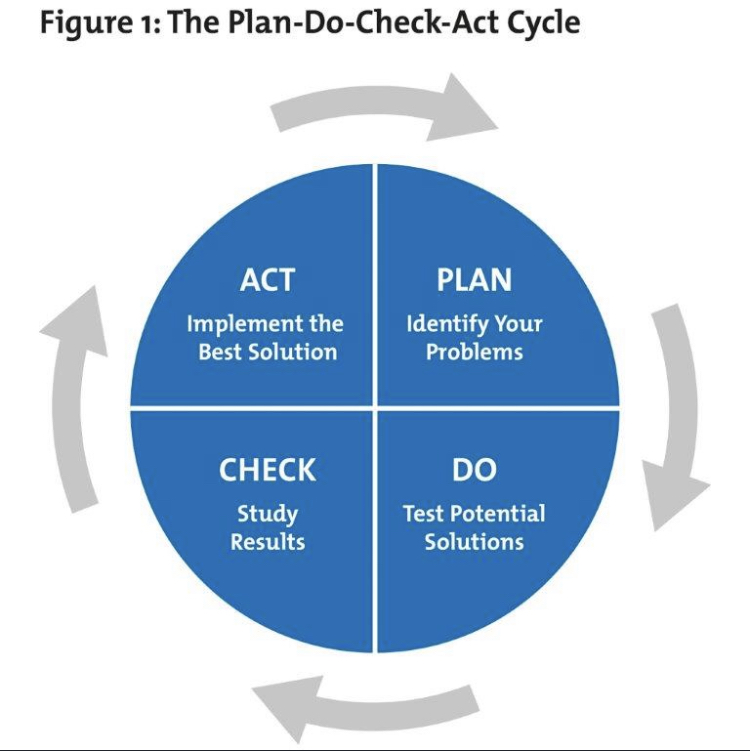
In the field of engineering, particularly Continuous Improvement, there is a tool we use. It’s called PDCA. Short for Plan Do Check Adjust. It is an iterative, four-stage approach for continually improving processes, products or services, and for resolving problems. It involves systematically testing possible solutions, assessing the results, and implementing the ones that have shown to work.

The problem solving skills I learned as an engineer somehow made its way to the way I coach my lifters.

The sport of Weightlifting is simple: Pick bar up and bring it overhead. Paradoxically, its simplicity oftentimes is also the source of its complexity. But only if we let it.

So listen to Albert Einstein. He did not even lift, bro. But he knew what he was talking about.